10.23.2010

THESIS ACCEPTED, NO AMENDMENTS!


Thank you again to everyone who helped me along the way, with your encouragement, advice, and/or (welcome) distraction :)

The official thesis can be found here at the UWSpace Theses and Dissertations Archive. Printed copies to be published soon.

9.07.2010

how long i have waited for this day....

NOTICE OF M.ARCH. THESIS DEFENCE

By M. Arch candidate: Angie Ng

Of the thesis entitled: On Luxury

Abstract

Indulgent and desirable, luxury both boasts and seduces. Luxury is an elaboration on the essential, manifest in forms of etiquette and exclusion. Films index both reality and fantasy. They reflect, denounce, and exaggerate, making them invaluable cultural documents. Post-World War Two, the ease of air travel, mass production of goods, and foreign influence changed the face of luxury. By examining the films To Catch a Thief (1955), La Dolce Vita (1960), and Breakfast at Tiffany’s (1961) – all three from the era of this shift in luxury – this essay excavates this change, by examining the narrative, objects, and architecture of selected scenes.

The examining committee is as follows:

Supervisor: Donald McKay

Committee Members: Rick Haldenby, University of Waterloo

Anne Bordeleau, University of Waterloo

External Reader: Greg Klymkiw, Senior Creative Consultant, Canadian Film Centre

The committee has been approved as authorized by the Graduate Studies Committee.

The Defence Examination will take place:

Tuesday, September 21, 2010

10:30 am

ARC 1001 Main Lecture Hall

A copy of the thesis is available for perusal in ARC 2106A or a PDF version here.

8.19.2010

"I'm five years too old to lie to myself and call it honor" -Nick Carraway

A rediscovery of F. Scott Fitzgerald's The Great Gatsby.

Edit and scheduling, two words I've developed viscerally upsetting reactions to.
The end of the thesis journey is so close I can taste it.

7.16.2010

"Photographing attractive people doing attractive things in attractive places."


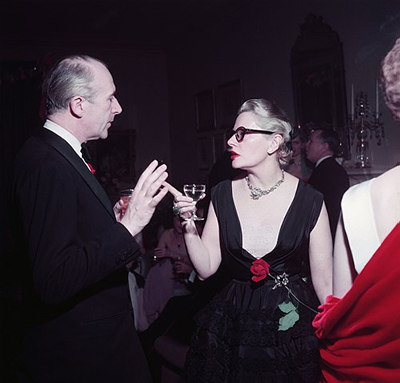
Fleur Cowles with Cecil Beaton at a New Year's party, on Park Avenue, New York. (1952).


Katherine Hepburn with Irene Mayer Selznick at Montego Bay, Jamaica. (1953).


Christina and Alexander Onassis at Monte Carlo Beach Club. (1958).


The mantra of Slim Aaron.

When Truman Capote and Noel Coward recorded the world of luxury with words, Aaron did it with photographs.

a woman after my own heart


Alice T. Friendman's American Glamour and the Evolution of Modern Architecture.

Read The New York Times Q&A.

"My goal was to link a group of disparate architectural works and explain why they looked the way they did, and in the process reveal the complexity in the definition of modern architecture. It’s not just rational problem-solving and engineering-based. It’s much more about stories, pleasure and mystery."

7.15.2010

Abstract (revised)

An architectural education develops a strong appreciation for fine craftsmanship, innovation, and quality of materials. The three principles of architecture established by the Roman architect Vitruvius – firmitas (durability), utilitas (utility), venustas (delight) – make it clear the discipline of architecture emphasizes beauty and comfort beyond the basic demands of shelter. Inherently, architecture and luxury have a convincing relationship. Luxury is all pleasure and comfort beyond necessity. Indulgent and desirable, luxury both boasts and seduces. Luxury is an elaboration on the essential, manifest in forms of etiquette and exclusivity based on social and economic rank. It is shifting to a more prescriptive, mockingly democratic process of collecting coveted objects. Spaces and cities have become part of the collectibles as well. There is little attention paid as to why these areas and items have gathered cachet, though there is plenty of evidence.

Films index both reality and society’s fantasies. They reflect, denounce, and exaggerate paradigms contemporary to its production, making them invaluable resources for cultural episodes. Post-World War Two, the ease of air travel, mass production of goods, and foreign influence changed the face of luxury. By examining the films To Catch a Thief (1955), La Dolce Vita (1960), and Breakfast at Tiffany’s (1961) – all three from the era of this shift in luxury – the thesis interprets the causes of this change by a detailed examination of the narrative, objects, and architecture of selected scenes.


________________________

It's been a while since the last post.

The thesis is with an external editor right now, Sean Irwin. Thank you, thank you!!

6.15.2010

One external reader: found!

Greg Klymkiw

"Greg Klymkiw has devoted his life and career to the development, distribution and production of indigenous, independent Canadian film culture. He is currently the Producer-in-Residence at the Canadian Film Centre...And yes, he watches movies too. At last count, Klymkiw had seen over 30,000 feature films. "


More on him here.

6.04.2010

How I approached the subject matter

Just like most other projects within the School of Architecture:

The movement
1950s to 1960s (luxury goes from space of manners to system of possessions)

Exemplary works
To Catch a Thief, La Dolce Vita, Breakfast at Tiffany's

Sections
Screenplay excerpts

Details
Footnotes (literary exegesis)


Draft to be returned in 2 weeks. Signoff around the corner?? Defense in 6???

5.11.2010

2nd draft in PDF

Here is the 2nd draft of my thesis in downloadable PDF format!

Entire double page spreads and paragraphs may change....
...but here it is for now.....

Remember Now

Just a frivolous post.

The short film by Karl Lagerfeld for this 2011 Cruise Collection Remember Now, launched today.

Reinforcing stereotypes of models, designers, and St. Tropez? Check, check, and check. But what makes this worth your time is witnessing the genesis of glamour using heavy references of French history, foreign accents, music of eras past, lush textiles, Mediterranean architecture, and the always unsettling mix of young ingenues hanging off of seasoned tastemakers. Not to offend Fellini lovers, but even a tad of a French La Dolce Vita.

4.05.2010

the bare facts


A little chart for ease of comparison. Have been writing a lot...the result of which should soon be a first draft!(?)

3.30.2010

Think about it.


"Some people think luxury is the opposite of poverty. It is not. It is the opposite of vulgarity."
-Gabrielle (Coco) Chanel


"Living in the lap of luxury isn't bad, except that you never know when luxury is going to stand up."
-Orson Welles

3.29.2010

PROLOGUE

Our architectural education, among many other things, creates a strong sense of appreciation for fine craftsmanship, innovation, and quality of materials, yet not necessarily always the salaries to acquire them. This is a cruel irony I am still trying to come to terms with. And by virtue of looking at movies, I recognize the paradox of the issue of authenticity with a form of media that is inherently fictional. But it is in this construct that allows for the evolving nature of luxury to be unveiled -- by a sort of distorted mirror principle.

Since writers are by nature outsiders, often standing at the edges looking in (in line with the characters I focus on), then writing this thesis about luxury makes me an outsider, squared. Still, the credo of writing floated to the surface of my thoughts: write about what you know. My exposure to luxury, in terms of travel, goods, and services, is by global standards a healthy average. I am not immune to the omnipresent marketing and advertising of designer brands that infiltrate our modern lives. Yet, I am also not one to (too easily) buy into their hallow promises of status and respectability. Still, I fall prey.

I have tried on more than one occasion to chase the fashionable milieu dream. Visits to the south of France, Rome, and New York always included specially planned outings to the boutique of the moment, the restaurant du jour, the famed and illustrious hotel. But today, when it hardly makes any difference whether you walk into a Louis Vuitton store in Xiamen or Stuttgart or Denver, the face of true luxury eludes us. I recall back to the time I was in Santee Alley in Los Angeles, looking at an array of counterfeit merchandise, the crooked and weathered wooden table it was placed upon, the dirty tarp that covered the niche for the storage of more of the same. The smell of cheap leather and over-use of glue, the dull clang of shoddy metalwork clasps in highly-recognizable logo shapes. Not to mention the alarming probability that these untaxed profits will go on to fund illegal firearms or drug trafficking. And finally, it came full circle during the documentary of Medecins Sans Frontieres (Doctors Without Borders) called “Living in Emergency”. The incredulousness and irrelevancy of seeing an LV scarf wrapped around the head of an MSF national volunteer from Liberia as he was helping usher a gun wound victim in a DKNY shirt into the free hospital NGOs have set up in the war-torn country. That's when I realized what our general sense of self-presentation of wealth has become -- a rootless, thoughtless, fully-compromised mirage of symbols.

I want to find the root of this change. I want to figure out the mechanisms with which this propagated. I do not want to reverse the evolution nor do I want to shut the gates for exclusivity. But if everything boiled down to false homages and fabricated authenticity, at least I need to know the originating source. And perhaps even find a cure to undo this spell.

3.22.2010

Deluxe by Dana Thomas

How did I miss this read? At least I'm on it now.

Googlebooks preview

(Thanks Andrea!)

THESIS-IN-NUTSHELL III


diagrammatic outline of thesis, another attempt

3.20.2010

movies and architecture

This is an old project (4A!) that was an experiential map of personal perception and exploration along the Via del Mandrione towards Rome.

A building can only be experienced when walked through, when inhabited.
The unfolding of spaces is comparable to the unreeling of scenes in a film.

In this way, mass media dominates daily life, and we see in visual staccatos and hear in sound-bytes. Film aids architecture by inspiring the average filmgoer to take an interest in the built environment and to experience within the realms of cinema what they may never experience in real life. Film also returns to architecture a mass medium where both the trained and untrained can become the critique.

However, architecture will remain when film is gone, as architecture affords film its temporal structure.

(Source: Thomsen, Christian W. & Krewani, Angela. Hollywood: Recent Developments. Stuttgart: Axel Menges, 2005.)


Team: M Karimi / J Lee / D McNinch / R Micacchi / S Neault / A Ng / K Schwartzkopf / M Tataryn


3.10.2010

original movie posters


“Cinematographic posters are like popular songs: they take you back to certain moments of your life, preventing you from losing them. They take you back not only to the film, but to their season, the atmosphere and the tastes of an era.”
Federico Fellini


The film poster is still often first point of entry to film; a synthesis of art and the market. It establishes the first scene, focussing on star quality, and creating mood. It becomes the calling card for film itself; captialising on allure. In the 1950s and 1960s, it was the main vehicle for publicity on walls of towns and cinema entrance halls, following a film as it moved from second and third showings and into provincial theatres. After a film’s release these posters were usually sent back to the distributor at the end of the run and destroyed. Due to its disposable nature, originals are rare. The average print run in Italy was 2000-3000 copies.

tester map for La Dolce Vita scenes

3.08.2010

A Time and Place


This is a timeline of the 3 movies with the chosen scenes and their locations.